
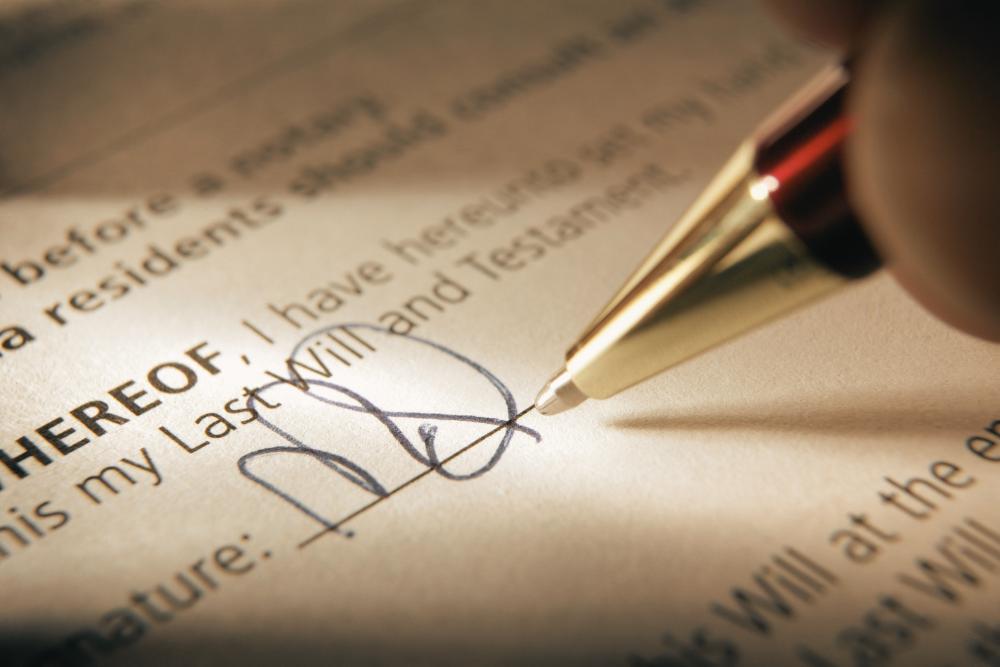
A self-proving will is the simplest way to keep your family out of a probate bottleneck, and most people in New Jersey have never been told it exists. The term sounds technical, but the idea is plain: it’s a will set up so the Surrogate’s Court can accept it without having to track down the people who witnessed you signing it, sometimes decades earlier. That’s the whole problem a self-proving will solves. When an ordinary will reaches the court, the Surrogate often has to confirm it’s genuine by reaching one of the original witnesses, and witnesses move out of state, lose touch, and pass away. A self-proving will captures their confirmation up front, in a short notarized affidavit signed the same day as the will, so no one has to be tracked down later. Here’s how it works, what the law requires, and why we recommend it to nearly every client who sits down to make a will.
What a Self-Proving Will Actually Is
Start with the difference between a will that’s valid and a will that’s self-proving, because they’re not the same thing. A valid will, under N.J.S.A. 3B:3-2, just needs to be in writing, signed by you, and signed by two witnesses. That’s enough to be enforceable. But “valid” doesn’t mean “easy to prove.” When a plain valid will reaches the Surrogate, the court still has to confirm it’s authentic, and the usual way to do that is to have one of your witnesses come in and testify, or sign a sworn statement, that they actually watched you sign. A self-proving will skips that step. Under N.J.S.A. 3B:3-4, you and your two witnesses sign a sworn affidavit in front of a notary at the time you sign the will. That affidavit is the witnesses’ testimony, captured and notarized in advance. Because it’s already a sworn statement, the Surrogate can admit the will to probate without bringing your witnesses back in. The will, in effect, proves itself. That’s where the name comes from.
How a Self-Proving Affidavit Is Done
The mechanics are simple, which makes it that much more frustrating when people skip this step.
Everyone Signs Together, in Front of a Notary
You sign your will with your two witnesses present, as usual. Then, in the same sitting, all three of you sign a separate affidavit in front of a notary public. The notary administers an oath, watches the signatures, and notarizes the document. The affidavit gets attached to the will. The affidavit itself states the things a court would otherwise need to establish: that you signed the document as your will, that you did so willingly and free of pressure, that you were 18 or older and of sound mind, and that the witnesses observed all of it. N.J.S.A. 3B:3-4 lays out substantially the language the affidavit should follow, so there’s no guesswork about what it needs to say.
One Important Clarification About the Notary
This trips people up constantly, so let’s be direct: the notary is not what makes your will valid. The two witnesses do that. Notarizing the will by itself does nothing for validity. The notary’s entire job here is to turn a properly witnessed will into a self-proving one by handling the affidavit. A will can be notarized and still invalid if it lacks two witnesses. A will can have no notary anywhere near it and still be perfectly valid with two witnesses. The affidavit is the only reason a notary belongs in this process at all.
Already Have a Will? You Can Add It Later
If you signed a will years ago and never included a self-proving affidavit, you’re not stuck. N.J.S.A. 3B:3-5 lets you make an existing will self-proving after the fact. You and your witnesses sign the affidavit before a notary at a later date and attach it to the original will. That does mean rounding up the same witnesses again, which is a small preview of exactly the problem the affidavit is meant to prevent, and a good reason to handle it at signing rather than putting it off.
Why It Matters So Much at Probate
To understand the payoff, it helps to know what happens at the Bergen County Surrogate’s Court, where a Bergen County resident’s will is proven, when a will isn’t self-proving. Without a self-proving affidavit, the Surrogate generally has to verify the will the slow way: locating at least one of the witnesses who signed and getting them to confirm, under oath, that they watched the signing. When your witnesses are nearby and reachable, that’s a minor inconvenience. The trouble is that wills sit in drawers for decades, and people don’t stay put. Witnesses move out of state, lose touch, change names, and, given enough years, die. We’ve seen families lose weeks chasing down a witness to a will signed twenty years earlier, all to confirm something everyone already knew was true. A self-proving affidavit removes that entire link in the chain. The witnesses’ testimony is already on file, sworn and notarized, so the Surrogate can move straight to admitting the will. Less delay, fewer phone calls to people your family barely knows, and no risk that a critical witness has become unreachable by the time it matters.
If you’re not sure whether the will in your drawer is self-proving, it’s worth finding out now rather than leaving your executor to discover it the hard way. Contact Sammarro & Zalarick for a free consultation and we’ll take a look.
Optional, but Strongly Recommended
To be clear: a self-proving affidavit is not required for a will to be valid in New Jersey. You can have a fully enforceable will without one. Holographic (handwritten) wills don’t have one by their nature, and plenty of older wills were never made self-proving. But “optional” and “skippable” aren’t the same thing. The affidavit costs almost nothing to add when you’re already signing: a few minutes and a notary, who’s often present at an attorney’s office signing anyway. In exchange, it removes a step that can otherwise stall an estate for weeks and send your grieving family on an avoidable scavenger hunt. There’s no real downside and a meaningful upside. One thing we always tell our clients is that this is some of the cheapest insurance in all of estate planning. It’s why nearly every will we prepare is self-proving as a matter of course.
A Few Things a Self-Proving Affidavit Does Not Do
It’s just as important to be clear about the limits, because the affidavit isn’t a cure-all. It doesn’t make a flawed will valid. If you only had one witness, or no witnesses, an affidavit can’t paper over that. The underlying will still has to meet the requirements of N.J.S.A. 3B:3-2. Nor does it shield your will from every challenge. A self-proving affidavit confirms that the signing was done properly. It doesn’t prevent someone from contesting the will on other grounds, for example claiming you lacked mental capacity or were under undue influence when you signed. What it does is take the execution of the will off the table as an issue, which is no small thing, since improper signing is one of the most common grounds for a contest. It closes one door firmly; it doesn’t lock the whole house. And it doesn’t keep your will current. An affidavit on a will that no longer reflects your life, after a divorce, a new marriage, a new child, a major change in assets, just means an outdated will proves itself quickly. The affidavit handles authenticity, not whether the contents still match your wishes.
Frequently Asked Questions
Is a self-proving affidavit required in New Jersey?
No. A will is valid without one as long as it’s in writing and signed by you and two witnesses. The affidavit is optional. It’s strongly recommended because it lets the Surrogate’s Court accept the will without contacting your witnesses, but its absence doesn’t make a will invalid.
What’s the difference between notarizing a will and making it self-proving?
Notarizing the will itself does nothing for validity in New Jersey. Witnesses are what make a will valid. Making a will self-proving means you and your two witnesses sign a separate sworn affidavit before a notary, under N.J.S.A. 3B:3-4. The notary’s role exists to handle that affidavit, not to validate the will.
Can I make an existing will self-proving?
Yes. N.J.S.A. 3B:3-5 allows you to add a self-proving affidavit to a will after it was originally signed. You and your original witnesses sign the affidavit before a notary and attach it. The catch is that you need those same witnesses again, which is easier to arrange at the original signing than years later.
Does a self-proving affidavit prevent someone from contesting my will?
Not entirely. It establishes that the will was signed properly, which removes one common basis for a challenge. But someone could still contest the will on other grounds, such as claiming you lacked capacity or were pressured. The affidavit settles the question of proper execution, not every possible dispute.
Who can serve as the notary for a self-proving affidavit?
Any New Jersey notary public authorized to take acknowledgments. Often, when a will is signed at a law office, a notary is already present, so the affidavit is handled in the same sitting. The key requirement is that you and both witnesses sign the affidavit before that notary.
Make Your Will Prove Itself
A self-proving affidavit is a small page that does a large job: it spares your family the delay, expense, and frustration of proving something everyone already knows is true. It’s optional, it’s inexpensive, and after more than 30 years and 16,000 clients, we can’t think of many reasons to skip it. If you’re drafting a new will, make it self-proving from the start. If you already have one, find out whether it has an affidavit, and if it doesn’t, fix that. Contact Sammarro & Zalarick for a free consultation, and we’ll make sure your will is ready to do its job without putting your family through an unnecessary ordeal. Disclaimer: This blog post is for informational purposes only and does not constitute legal advice. Every case is different. Contact Sammarro & Zalarick directly to discuss your specific situation.
Written by Gary J. Zalarick, Esq.
